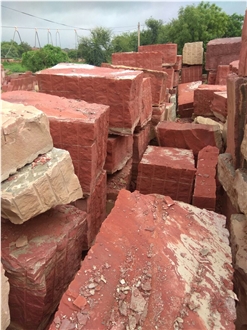
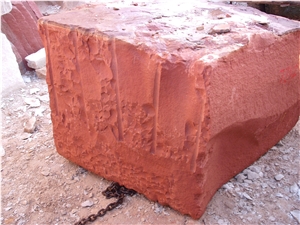
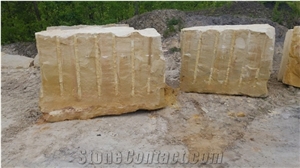
Agra Red Sandstone Blocks
 India
 3YR

Min Order : 18 Tons
| Grade | Size | Surface | Reference FOB Price |
|---|---|---|---|
| A | 280*200*130cm | Natural Surface | $25.00-40.00/Tons |
India Dholpur district in Rajasthan




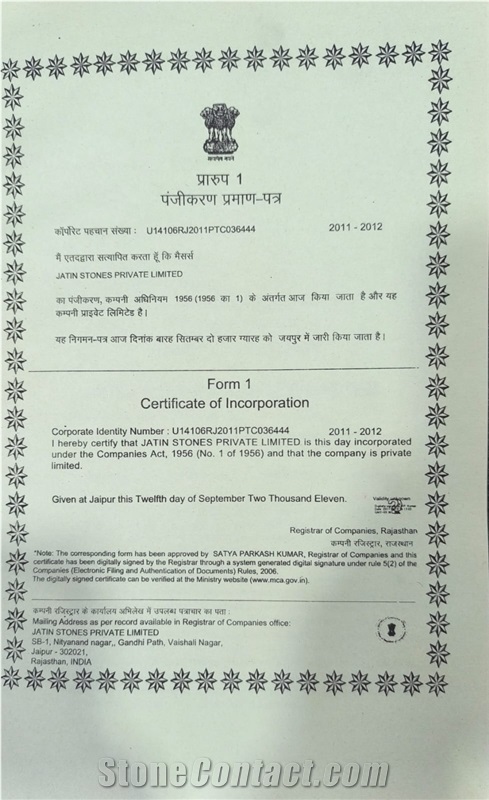
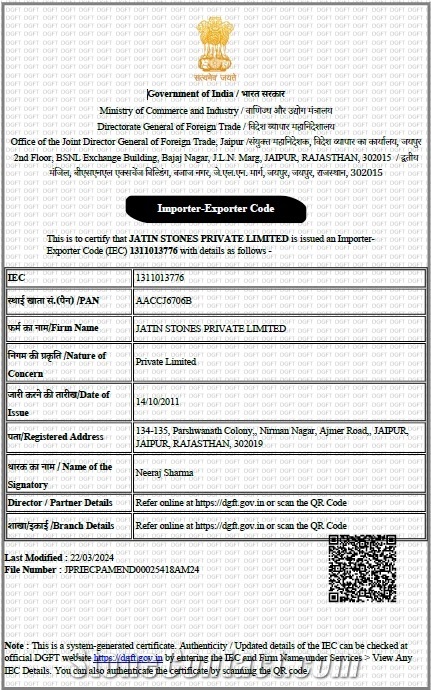
Established: Sep 12,2011
Main Product: SANDSTONE, STONE ARTICLE, MARBLE, GRANITE, SLATE STONE, LIME STONE

Mr. jatin sharma
CSO
Tel: 91-6376594180
Adr: 134, 135, Parshav Nath Colony Rd, Parshwanath Colony, Rani Sati Nagar, Nirman Nagar, Brijlalpura, Jaipur, Rajasthan 302019
India3YR
 Spain

India

 Italy15YR
 Poland

India3YR

 China2YR

India1YR
The Agra Red Block, commonly known as the Agra Fort, is a majestic historical structure located in the city of Agra, Uttar Pradesh, India. Situated on the banks of the Yamuna River, this imposing fort was once the seat of the Mughal emperors and has stood as a symbol of the grandeur and opulence of the Mughal Empire. It is an outstanding example of Mughal architecture, particularly notable for its use of red sandstone, which is why it is often referred to as the "Red Fort" or "Red Block."
The history of the Agra Red Block traces back to the early 16th century. The fort was originally built by the Mughal emperor Akbar in 1565, although it was later expanded and embellished by subsequent rulers, particularly his grandson, Shah Jahan. Akbar, who ascended the Mughal throne in 1556, chose Agra as his political and administrative center due to its strategic location near Delhi and its proximity to important trade routes. The fort’s construction was a significant move to solidify Mughal power and demonstrate the strength and sophistication of the empire.
Before the Mughal construction of the fort, there was a smaller structure, a fortification built by the Sultan of Delhi, Iltutmish, in the 13th century. However, it was Akbar's massive reconstruction and expansion that gave the Agra Red Block its present form. He decided to transform the original fortress into a grand palace and administrative complex that could serve the Mughal rulers for generations.
The fort was constructed using large quantities of red sandstone, which was quarried from nearby areas. This is why the fort is commonly referred to as the "Red Fort" or the "Red Block." It took nearly 8,000 workers about eight years to complete the initial construction. Over the following decades, additional sections of the fort were built, particularly during the reigns of Jehangir, Shah Jahan, and Aurangzeb.
In 1638, Shah Jahan, the emperor famous for building the Taj Mahal, added his own embellishments to the fort. He introduced more refined marble work and incorporated luxurious features, including intricately carved designs, ornate gates, and elegant courtyards. The fort’s layout was also modified to include a more formal garden design inspired by the Persian-style gardens known as Charbagh.
The Agra Red Block continued to be the imperial residence and political center of the Mughal empire until the 17th century. It played a significant role in the life of Emperor Shah Jahan, who was later imprisoned in the fort by his son, Aurangzeb. Shah Jahan spent the last years of his life in the fort, gazing out at the Taj Mahal, which he had built in memory of his wife, Mumtaz Mahal.
The Agra Red Block is a remarkable piece of architecture that blends Persian, Timurid, and Indian influences. The fort covers a vast area of around 94 acres and is surrounded by a massive wall made of red sandstone. The wall is punctuated by imposing gates, including the Delhi Gate, Lahore Gate, and Akbar Gate, which provide access to the inner portions of the fort.
The Diwan-i-Aam (Hall of Public Audiences): This large hall was used by the emperor to meet with the public, hear petitions, and conduct state business. It features a series of arches supported by slender pillars and is open on all sides, offering a view of the surrounding gardens and courtyards.
The Diwan-i-Khas (Hall of Private Audiences): Unlike the Diwan-i-Aam, the Diwan-i-Khas was used by the emperor to meet with courtiers, nobles, and high-ranking officials. This hall is famous for its central throne platform, where the emperor sat in a lavish marble seat.
The Sheesh Mahal (Palace of Mirrors): One of the most famous structures in the Agra Red Block, the Sheesh Mahal is a beautiful palace adorned with intricate mirror work. The walls and ceilings of this palace are inlaid with thousands of tiny mirrors, which reflect light and create a stunning visual effect. This was used as a royal residence for the Mughal emperor.
The Musamman Burj: This is a circular tower that offers one of the best views of the Taj Mahal. It is believed that Shah Jahan was imprisoned here by his son, Aurangzeb, and spent the last years of his life gazing at the monument he built in memory of his wife.
The Jahangiri Mahal: Built by Emperor Akbar for his wife, this is one of the most beautiful palaces in the fort, characterized by its unique blend of Mughal and Rajput architectural styles. It features intricately carved stonework and a series of courtyards.
The Agra Red Block is not just an architectural marvel but also a symbol of the Mughal empire’s power, culture, and sophistication. It embodies the grandeur and artistic achievements of the Mughal period. The fort is a prime example of Mughal military and residential architecture, featuring large defensive walls, strategic gates, and sophisticated living quarters.
The Delhi Gate is the main entrance to the fort, and it is particularly impressive with its large, imposing structure. This gate was primarily used by the emperor and his entourage. It is equipped with a drawbridge, which was once used for added security.
India3YR
Spain
India
Italy15YR
Poland
India3YR
China2YR
India1YR
 India
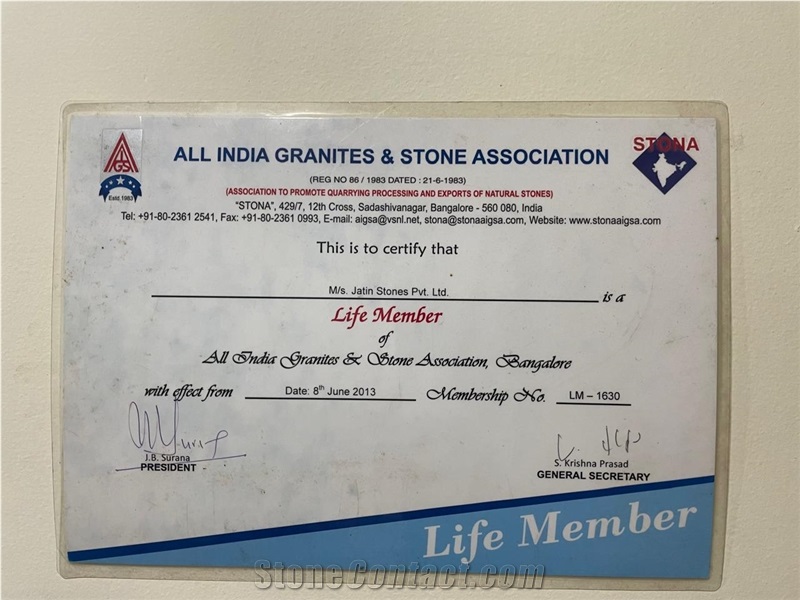
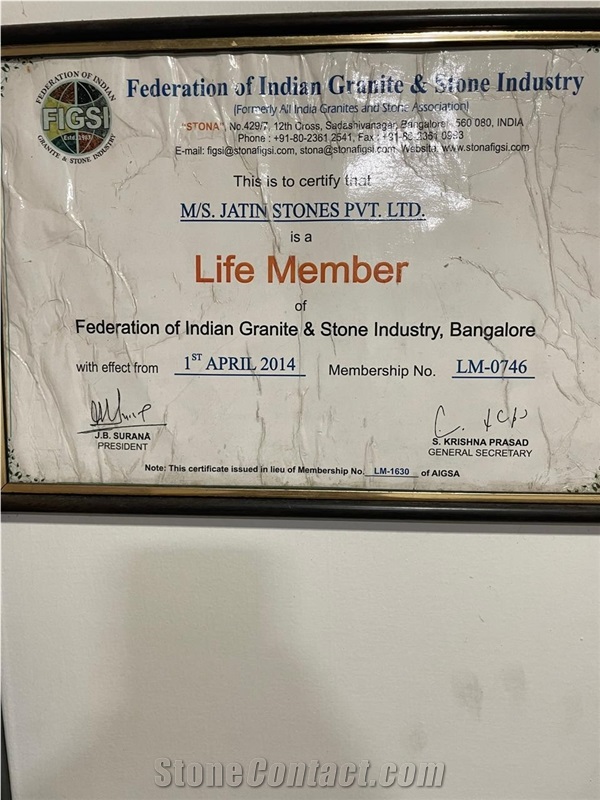
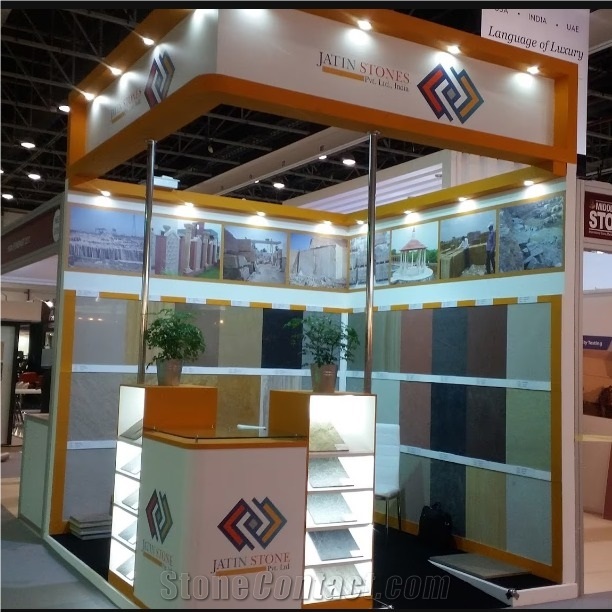
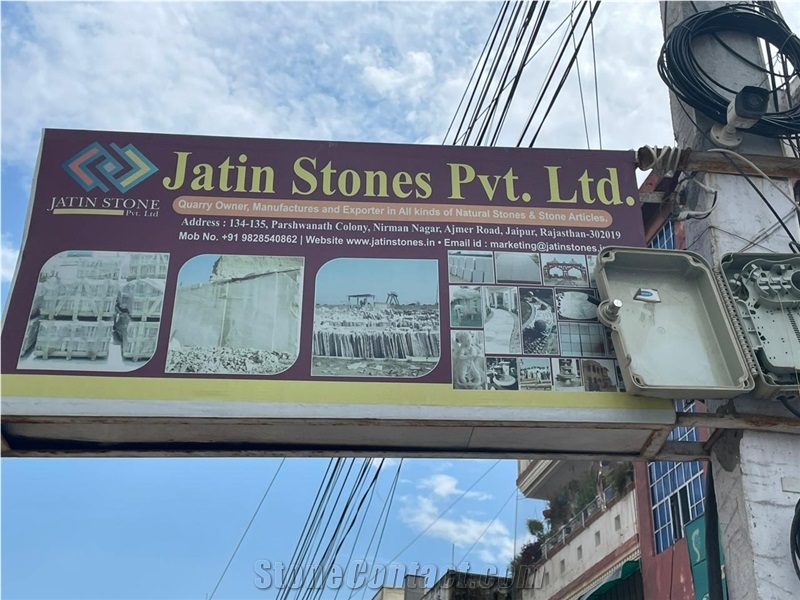
Jatin Stones Pvt. Ltd. is one of India’s leading suppliers and exporters of premium natural stones. Jatin Stones is one-stop shop for seekers of best quality natural stones, artifacts of sandstone & marble and complete landscaping solutions. We are glad to inform that this is our ancestral Business.
India has a rich history of providing stones of the highest quality used for building purposes. From the royalty of ancient India to the architects of today, the stones quarried such as marbles, sandstone, Granite, pavings, Garden Ornaments etc, have been appreciated for their perfection. At Jatin Stones, we continue this tradition through our products and services.
We are known across the world for our reliable customer services. Our Endeavour is to provide value for money to our customers and to make every single deal a pleasure. We can mix and match containers as per clients requirements so that client orders only what his immediate needs are and avoids carrying expensive extra inventories.
We strive and try our best to remain at the cutting-edge of service, quality, integrity and excellence in all that we do.
We have our Marketing Office in Jaipur and our Factory is located in “Hindaun City” in Rajasthan. We have a complete range of machines like cutting machines, sandblasting, Gangsaw and many more.
Jatin Stone Pvt. Ltd. | jatin stones private limited | 2011-09-12
| Factory size | 3000 sqm |
|---|---|
| Production lines | 4 |
| Factory location | Ricco Industrial area Hindian city |
| R&D capacity | Own Brand, OEM |
| Nearest port | mundra, chennai, mumbai |
|---|---|
| Delivery terms | FOB, CFR, CIF |
| Payment types | T/T, L/C, Credit Card, Western Union |
| Currencies | USD, EUR, CAD, AUD, GBP |
| Annual revenue | US$1 Million-US$2.5 Million |
| Export percentage | 71%-80% |
| Language spoken | English |