Post Your Needs

Turquoise Granite

Blue - Granite

Iran

About

Item Details

Material Type:
Granite
Origin:
Iran (Khorasan, Mashhad)
Primary Color(s):
Blue
Recommended Usage:
kitchen and bathroom countertops, monuments, building stone, ornamental stone, stairs, interior, exterior wall and floor applications, mosaic, waterjet pattern, balustrades, fireplaces, columns
Additional Names:
Mashhad Blue Granite, Turquoise Blue Granite, Blue Turquoise Granite, Khorasan Blue Granite, Firoozeh Granite, Costa Esmeralda Green Granite, Costa Esmeralda Granite, Turquoise Granite
Finished Surface:
Polished,Flamed,Bush Hammered,Tumbled,Brushed,Honed,Split,Machine Cut,Natural Surface,Sandblasted,Acid Washing,Combed,Leathered,Water Jet,Filled,Chiseled,Pickling

Testing

Water Absorption:
0.2 - 0.35% by weight
Density:
2650 - 2750 Kg/m³
Flexural Strength:
12 - 15 MPa
Compressive Strength:
160 - 180 MPa

Description

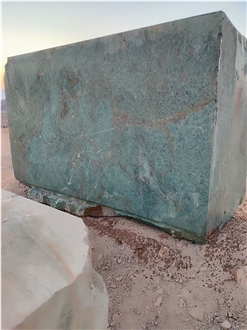
Turquoise Granite is a striking natural stone distinguished by its vibrant blue-green base color, reminiscent of the gemstone turquoise. This lively hue is interspersed with elegant white and golden rusty brown veins, creating dramatic movement and a vivid visual effect. It is quarried from the mountainous regions of Khorasan, near Mashhad, Iran.

Texture & Pattern

Texture: Medium to coarse-grained crystalline texture typical of granite.

Pattern: Predominantly blue-green background. White quartz streaks and patches. Rusty golden brown to ochre veins due to iron oxide inclusions. Occasional speckled feldspar highlights.

Physical & Mechanical Properties

(approximate typical values based on general tests for Iranian granites of similar type; actual test results should be confirmed by quarry lab reports)

  • Water Absorption : ~0.2 - 0.35% by weight
  • Apparent Density : ~2.65 - 2.75 g/cm³
  • Compressive Strength : ~160 - 180 MPa
  • Flexural Strength : ~12 - 15 MPa
  • Abrasion Resistance : High
  • Mohs Hardness : ~6 - 7
  • Porosity : Low

Chemical & Mineral Composition

  • Quartz (SiO₂) : 25 - 30%
  • Feldspar (K, Na) : 55 - 60%
  • Mica (biotite) : 5 - 8%
  • Iron Oxides : 2 - 4%
  • Trace minerals : <1% (apatite, zircon, etc.)

Color mainly comes from the microcrystalline feldspars and minor copper-rich minerals that give the turquoise hue.

Usage & Applications

Interior:

  • Luxury kitchen countertops, vanity tops
  • Wall cladding, staircases, fireplace surrounds
  • Decorative tiles and medallions

Exterior:

  • Facades, building stone
  • Garden and landscape features
  • Monumental stone & sculptures

Maintenance

Easy to maintain due to low porosity. Periodic sealing recommended to preserve vibrant color and prevent staining. Clean with pH-neutral stone cleaners; avoid acidic products.

Available Cutting Sizes (cm)

Slabs : 180 x 280 up to 200 x 320 (2 cm & 3 cm thick)

Tiles : 30 x 60, 60 x 60, 60 x 120, custom sizes

Blocks : 240 x 120 x up to 150 cm

Surface Finish Options

  • Polished (enhances blue-green vibrancy)
  • Honed (smooth matte appearance)
  • Leathered / brushed (soft textured feel)
  • Flamed (for anti-slip exterior use)
  • Sandblasted (decorative rough texture)

Turquoise Granite from Mashhad, Iran, is a rare and exotic natural stone that captures the enchanting beauty of turquoise gemstone. Its durability, combined with its vivid colors and unique veining, makes it ideal for premium architectural and decorative projects seeking a bold statement.

FAQ

What type of abrasive should I use to polish the Turquoise Granite floor surface?

To polish a Turquoise Granite floor surface, it is recommended to use a fine-grit abrasive such as diamond discs or pads. This will help to achieve a smooth and glossy finish without causing any damage to the stone. It is important to use the appropriate tools and techniques to avoid scratching or damaging the surface of the granite.
Read question details

What type of cutting blade should I use to cut 2cm thick Turquoise Granite?

To cut 2cm thick Turquoise Granite, you should use a diamond cutting blade that is specifically designed for cutting granite. Diamond blades are known for their ability to cut through hard materials such as granite efficiently and smoothly. When choosing a diamond cutting blade, ensure that it is the appropriate size for your cutting tool and that it has a continuous rim or segmented rim design for clean and precise cuts. It is also important to follow the manufacturers instructions and safety precautions while using the blade.
Read question details

Is Turquoise Granite durable for use as urban walkway pavers?

Yes, turquoise granite is durable and can be used as urban walkway pavers. Granite is a naturally dense and durable material that can withstand heavy foot traffic and environmental elements. Turquoise granite, specifically, is known for its vibrant blue-green color and unique appearance, which can add an attractive and eye-catching element to urban walkways. However, its important to consider that granite can be slippery when wet, so its advisable to choose a textured or non-slip finish for the pavers, especially in areas prone to rain or high moisture levels.
Read question details

Can Turquoise Granite be used for airport floor covering?

Yes, Turquoise Granite can be used for airport floor covering. Granite is a durable and long-lasting material that can withstand heavy foot traffic and frequent cleaning, making it suitable for use in high-traffic areas like airports. The turquoise color of the granite can also add a visually appealing and vibrant touch to the airport interior design.
Read question details

What thickness of Turquoise Granite bathroom countertop would be better?

The thickness of a Turquoise Granite bathroom countertop can vary based on personal preference and budget. However, a typical thickness for a granite countertop is around 1 ? inches (3 cm) or ? inches (2 cm). Both thicknesses are commonly used and offer their own advantages. A 1 ? inch (3 cm) thick granite countertop provides a sturdy and substantial look. It is more durable and less prone to cracking or chipping compared to a thinner countertop. This thickness also allows for more creativity with edge profiles as it provides a larger surface area to work with. On the other hand, a ? inch (2 cm) thick granite countertop is lighter in weight and may be more cost-effective. It can give a sleek and modern appearance to the bathroom without sacrificing durability. However, it may require additional support or reinforcement. Ultimately, the choice between these thicknesses depends on personal preference, the desired aesthetic, and the specific requirements of your bathroom.
Read question details

What thickness of Turquoise Granite backsplash tiles would be better?

The thickness of Turquoise Granite backsplash tiles depends on personal preference, design aesthetic, and the overall style of the kitchen or bathroom. Generally, backsplash tiles range from 6mm (0.24 inches) to 10mm (0.39 inches) in thickness. Thinner tiles may give a sleek and modern look, while thicker tiles can provide a more substantial and luxurious appearance. Consider the overall design and style of the space and choose a thickness that complements it. Additionally, if the area requires more durability or if the tiles will be exposed to heavy use and potential impacts, opting for a thicker tile may be preferable.
Read question details

How should I clean Turquoise Granite kitchen countertop?

To clean turquoise granite kitchen countertops, follow these steps: 1. Start by removing any loose debris and crumbs from the countertop surface using a soft cloth or a brush. 2. Create a solution of warm water and mild dish soap in a bucket or a sink. 3. Dip a soft cloth or sponge into the soapy water, wring out excess moisture, and gently wipe the countertop surface in a circular motion. Make sure to cover the entire surface with the soapy solution. 4. For stubborn stains or stuck-on grime, mix a paste of baking soda and water and apply it to the affected area. Let it sit for a few minutes, then scrub gently with a soft brush or sponge. 5. Once the countertop is clean, rinse the cloth or sponge thoroughly, and wipe down the surface with clean water to remove any soap residue. 6. Use a separate clean, dry cloth to gently dry the countertop. Avoid using abrasive materials or scrub brushes that can scratch the surface. 7. For extra shine and protection, apply a stone sealer or granite polish according to the manufacturers instructions. This will help to enhance the natural beauty of the turquoise granite and protect it from stains and water damage. Remember to avoid using harsh chemicals, acidic cleaners, or abrasive materials on turquoise granite, as these can cause damage or discoloration. Regular cleaning and maintenance will help to keep your countertop looking beautiful for years to come.
Read question details

Is Turquoise Granite durable for use as outdoor patio pavers?

Yes, turquoise granite is a durable and strong natural stone that is suitable for use as outdoor patio pavers. It has a high density and is resistant to natural elements such as weathering, fading, and staining. However, it is always recommended to check with a professional or supplier to ensure that the specific type of turquoise granite you are considering is appropriate for outdoor use.
Read question details

Does Turquoise Granite countertop scratch easily?

Turquoise granite countertops are generally considered to be harder and more durable than other types of granite due to the presence of minerals such as quartz and feldspar. However, it is important to note that no stone is completely scratch-proof. While turquoise granite countertops are less likely to scratch easily, they can still be scratched by sharp objects or abrasive materials if enough force is applied. Regular cleaning and maintenance, such as avoiding the use of harsh chemicals or abrasive cleaners, can help prevent scratches and preserve the beauty of your countertop.
Read question details

Can Turquoise Granite be used as a kitchen cutting board?

Turquoise Granite is a type of decorative stone commonly used for countertops and flooring. While it is known for its durability, it is not recommended to use it as a cutting board in the kitchen. Granite is a very hard material and using it as a cutting surface can potentially damage your knives. Additionally, granite is a porous material that can absorb liquids and food residues, leading to the growth of bacteria if not properly cleaned and maintained. It is recommended to opt for materials specifically designed for cutting boards, such as wood, bamboo, or plastic, which are more knife-friendly and easier to clean.
Read question details

Jim****

Is this sold in the US? How can I receive a sample?

Reply

Customer reviews

Project Show

Peacock Green Kitchen Countertop

Turquoise Green, also named Peacock Green, The kitchen countertop with this granite looks amazing. 

Peacock Green Kitchen Countertop

Products & Prices

View More

Hot Blue Granite

New Granite

Post Your Request

The request includes:
  1. surface finished, size
  2. quantity required