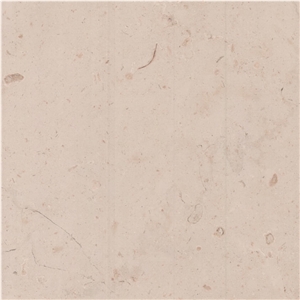
White Dew Limestone features a warm, creamy beige to pale ivory base, presenting a soft, inviting, and neutral palette. It is characterized by distinct fossil-like circular pits, shell imprints, and fine granular speckles scattered across the surface. These natural textures give the stone a classic fossil-limestone appearance.
Appearance: Warm creamy beige to pale ivory base with a soft, neutral and inviting overall appearance. The surface is characterized by distinct fossil-like circular pits, shell imprints and fine granular speckles distributed naturally throughout the stone, giving it a classic fossil-limestone character.
Color & Appearance
White Dew Limestone features a warm creamy beige to pale ivory background, sometimes showing subtle variations toward light beige, off-white and soft honey tones. The neutral coloration provides a versatile appearance suitable for both traditional and contemporary architectural designs.
Texture & Structure
The stone has a fine- to medium-grained, compact limestone structure with a naturally granular texture. Numerous small fossil fragments, shell traces and circular fossil cavities are embedded within the matrix. Depending on the finish, the surface can range from smooth and refined to naturally textured and tactile.
Pattern & Fossil Structure
The defining characteristic is its fossil-rich appearance. Distinct circular and oval fossil cavities, shell imprints and small fossil fragments are scattered across the surface, accompanied by fine granular speckles. The fossil distribution is generally random and low to medium in contrast, creating natural visual movement without strong veining.
Technical Characteristics
- Water Absorption: 0.8–1.5% by weight
- Density: 2,450–2,550 kg/m³
- Flexural Strength: 8–11 MPa
- Compressive Strength: 65–75 MPa
- Open Porosity: 1.0–2.5%
- Mohs Hardness: 3–4
Technical values are indicative and may vary according to quarry location, block selection and laboratory testing.
Mineralogical Composition
- Calcite: 90–96% by weight
- Dolomite: 1–4%
- Quartz: 0–2%
- Clay Minerals: 0–2%
- Accessory Minerals: 0–2%
The fossil components are predominantly carbonate material, mainly calcitic in composition.
Chemical Composition
- CaCO₃: 88–95% by weight
- MgCO₃: 1–3%
- SiO₂: 0.5–2.5%
- Al₂O₃: 0.1–1.0%
- Fe₂O₃: 0.1–1.0%
- Other Oxides: 0–2%
Chemical and mineralogical values are indicative; actual composition should be confirmed by laboratory analysis of the specific quarry material.
Recommended Usage
White Dew Limestone is suitable for:
Interior flooring, Exterior flooring and paving, Wall cladding, Interior and exterior façades, Feature walls, Bathroom walls, Vanity tops, Fireplace surrounds, Stairs and steps, Columns and architectural elements, Pool surrounds and coping, Patios and terraces, Garden pathways, Decorative panels, Tables and furniture, Landscaping applications.
For exterior and freeze-thaw applications, the specific quarry material should be tested for water absorption, freeze-thaw resistance and durability before specification.
Available Finishes
Honed, polished, brushed, tumbled, sandblasted, bush-hammered, natural/sawn, leathered, filled and unfilled finishes can be produced depending on the quarry and processing facility.
Maintenance
Clean regularly with a pH-neutral stone cleaner and a soft cloth or mop. Avoid vinegar, lemon juice, acidic cleaners, bleach, strong chemicals and abrasive products, as acids can etch limestone and alter its surface. Sealing is recommended, particularly for flooring, bathrooms, countertops and outdoor applications. Resealing should be carried out according to the sealer manufacturer's recommendations and the level of use. Clean spills promptly to minimize staining.


 France

 China
 Saudi Arabia

 Turkey

 Germany

 Italy

 Spain

 Portugal


